
Washer not filling with water
Check the faucets, hoses, lid and inlet screens to find why the washer won’t fill, and know when a part inside needs a technician.
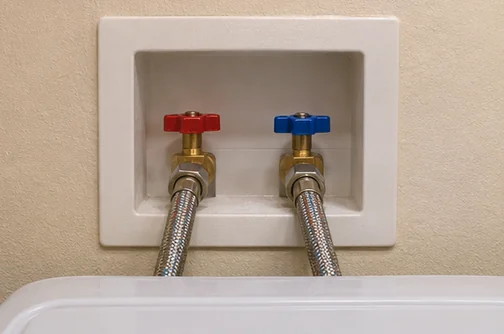
Short answer: A washer that won’t fill most often has a closed faucet, a kinked hose, a lid that isn’t fully shut or clogged inlet screens. Check the faucets, hoses, lid and water pressure, then clean the screens. If it still won’t fill, call an appliance technician to test the inlet valve and switches.
Check the warning signs below first.
Use this guide at your own risk. It’s general information, not professional advice. By using it, you agree to our Terms of Use and Safety Waiver.
Check for danger first
If any of these are present, stop here.
- Gas odor, smoke or fire. Leave immediately. From outside, call emergency services. For a gas odor, also call the gas utility. Leave lights and switches alone.
- Burning smell, scorch marks, a hot outlet or a buzzing panel. Stop and call an electrician. Stay clear of a suspect panel.
- Water near electrical equipment or exposed wiring. Keep away. Never cross water to reach a plug or breaker. Call a qualified electrician.
None of these warning signs? Open the checks
What to check
Have ready. A flashlight, a bucket, towels, pliers, an old toothbrush and your washer’s manual.
Open both faucets and check the hoses.
Make sure the hot and cold faucets behind the washer are fully open. Look along both fill hoses for kinks and straighten them, because a kink can block the water.
Close the lid and check the controls.
Close the lid or door all the way, since the lid switch keeps water from coming in when the washer senses it’s open. Make sure the cycle wasn’t paused or stopped.
Check the house water pressure.
Turn on a nearby faucet. If water is weak everywhere, the washer may fill slowly or not at all, and some models stop after 20–40 minutes of slow filling. Your water utility can check the pressure.
Clean the inlet screens.
Unplug the washer and turn off both faucets. Unscrew the hoses at the back of the washer into a bucket, then brush the screens inside the inlets with mild soapy water, as your manual directs. Reconnect the hoses, turn the water on and check for leaks.
When to stop. Stop and call an appliance repair technician if it still won’t fill with the faucets open, the hoses straight and the screens clean, or if a hose connection leaks. The water inlet valve, lid switch, water level switch or control board may have failed, and those are inside the washer.
What it costs
- The checks above: free.
- Washer repair: $128–$324, most pay about $204.
- Common fix: a new water inlet valve, $95–$190 installed.
- Lid switch replacement: $85–$160 installed.
National US ranges from 2025–2026 cost guides: Thumbtack · Fixr. Prices in your area may differ.
Common causes
- Faucets not fully open. Both the hot and cold faucets must be on all the way for the washer to fill. You can check
- Kinked fill hose. A kink in a hose behind the washer restricts or blocks the water. You can check
- Clogged inlet screens. Minerals and debris collect in the screens where the hoses attach and slow or stop the fill. You can check
- Lid not fully closed. The lid switch tells the washer the lid is shut; if it isn’t, the water inlet valve won’t open. You can check
- Low house water pressure. Low pressure makes the washer fill slowly, and some models time out; the water utility or a plumber can check it. Call a pro
- Failed inlet valve or switch. The water inlet valve, lid switch and water level switch are inside the washer, and a technician tests and replaces them. Call a pro
Sources: Whirlpool · GE Appliances · GE Appliances slow fill · Bob Vila.
Further reading · Whirlpool
Still stuck? Get help with your exact problem.
Snap a photo and tell the app what you’ve tried. It walks you through your model, one safe step at a time, and tells you when to call a pro. Your first fix in the app is free.
The app is coming soon. Get one email the day it launches.
One email when the app launches. No spam. Privacy Policy