
Heat pump covered in ice
Tell normal winter frost from ice that needs a technician, and clear around the unit safely.
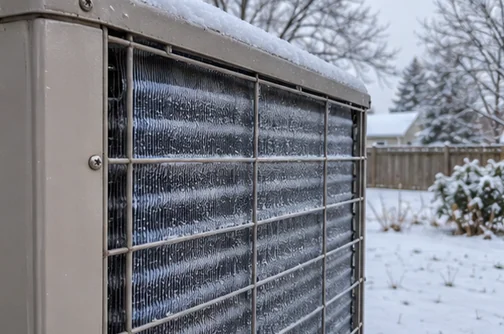
Short answer: Light frost that melts during defrost cycles is normal, but heavy ice that covers the unit or won’t clear means a problem. Clear snow and debris, make sure gutters don’t drip on it and replace a dirty filter. If ice stays more than 6–8 hours or keeps coming back, call an HVAC technician, and never chip it or use hot water.
Check the warning signs below first.
Use this guide at your own risk. It’s general information, not professional advice. By using it, you agree to our Terms of Use and Safety Waiver.
Check for danger first
If any of these are present, stop here.
- Gas odor, smoke or fire. Leave immediately. From outside, call emergency services. For a gas odor, also call the gas utility. Leave lights and switches alone.
- Burning smell, scorch marks, a hot outlet or a buzzing panel. Stop and call an electrician. Stay clear of a suspect panel.
- Water near electrical equipment or exposed wiring. Keep away. Never cross water to reach a plug or breaker. Call a qualified electrician.
None of these warning signs? Open the checks
What to check
Have ready. A soft broom, a snow shovel, a new indoor air filter and the time you first saw the ice.
Know what’s normal.
A light layer of frost on the outdoor coil is normal in cold, damp weather. The unit melts it with a defrost cycle; you may see steam, hear a swoosh, and the outdoor fan may stop for a few minutes.
Clear snow and debris around it.
Keep at least 2 feet clear around the outdoor unit. Gently brush light snow off the top with a broom, and don’t pile snow against the sides or cover them.
Check the gutters above it.
Make sure gutters and downspouts don’t drain or drip onto the heat pump. Water that pools around the unit can refreeze into heavy ice.
Replace a dirty indoor filter.
Restricted airflow makes the coil too cold and can lead to ice buildup. Replace the filter if it’s gray or clogged.
When to stop. Call an HVAC technician if ice covers the whole unit, doesn’t melt within 6–8 hours, refreezes quickly, or the unit never seems to defrost. Never chip at the ice or pour hot water on the unit; both can bend or crack parts. A failed defrost control, low refrigerant or a bad fan motor needs a pro.
What it costs
- The checks above: free.
- Pro heat pump repair: $150–$650, about $400 on average.
- Heat pump repair, national average range: $164–$722.
- Common fixes: a reversing valve, $350–$700; a refrigerant leak repair, $200–$1,500.
National US ranges from 2025–2026 cost guides: Fixr · Thumbtack. Prices in your area may differ.
Common causes
- Snow or debris blocking airflow. Blocked airflow makes the outdoor coil too cold, so ice builds up. You can check
- Gutter or roof water dripping on it. Water that drains onto or around the unit refreezes into heavy ice. You can check
- Dirty indoor filter. A clogged filter restricts airflow through the system and adds to icing. You can check
- Defrost control failure. If the defrost cycle doesn’t start or finish, ice keeps building; Lennox calls this one of the most common causes of severe freeze-ups. Call a pro
- Low refrigerant. A leak makes the coil run too cold so ice forms quickly. Call a pro
- Bad reversing valve or fan motor. Either part can keep the unit from clearing its ice. Call a pro
Further reading · Lennox
Still stuck? Get help with your exact problem.
Snap a photo and tell the app what you’ve tried. It walks you through your model, one safe step at a time, and tells you when to call a pro. Your first fix in the app is free.
The app is coming soon. Get one email the day it launches.
One email when the app launches. No spam. Privacy Policy