
AC turns on and off too often
Find out whether the thermostat, a dirty filter or blocked vents are cutting your AC’s cycles short.
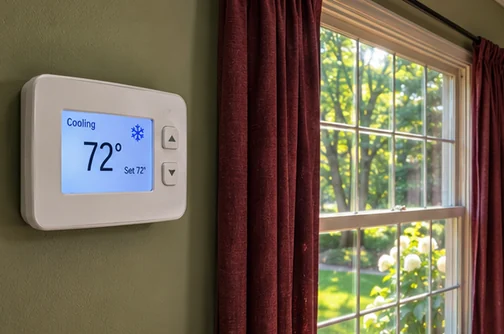
Short answer: A thermostat in a sunny or warm spot, a clogged filter or blocked vents can make an AC shut off after only a few minutes. Time a cycle, check the thermostat’s location and settings, replace a dirty filter and clear the vents. If it keeps short cycling, low refrigerant, an electrical part or an oversized system needs an HVAC technician.
Check the warning signs below first.
Use this guide at your own risk. It’s general information, not professional advice. By using it, you agree to our Terms of Use and Safety Waiver.
Check for danger first
If any of these are present, stop here.
- Gas odor, smoke or fire. Leave immediately. From outside, call emergency services. For a gas odor, also call the gas utility. Leave lights and switches alone.
- Burning smell, scorch marks, a hot outlet or a buzzing panel. Stop and call an electrician. Stay clear of a suspect panel.
- Water near electrical equipment or exposed wiring. Keep away. Never cross water to reach a plug or breaker. Call a qualified electrician.
None of these warning signs? Open the checks
What to check
Have ready. A watch to time the cycles, a new air filter in the right size, and fresh batteries if your thermostat uses them.
Time a cycle.
A healthy system usually runs about 15 to 20 minutes at a time. If it shuts off after only a few minutes, or starts about every 10 minutes, it may be short cycling.
Check the thermostat’s spot and settings.
Sun from a window, a nearby vent, a lamp or the kitchen can fool it into shutting off early. Check the mode and set temperature, and replace the batteries if it uses them.
Replace a dirty filter.
A clogged filter restricts airflow, so the system can overheat and shut down early. Replace it if it’s gray or clogged.
Make sure vents aren’t blocked.
Open the supply registers and move furniture, rugs or drapes off the vents and return grilles. If you see ice on the unit or its pipes, turn the system off at the thermostat and call a pro.
When to stop. If it still short cycles after these checks, call an HVAC technician. Low refrigerant, a failing capacitor or relay, and a system that’s too big for the house all need a pro. Moving a thermostat means rewiring it, so leave that to a technician too.
What it costs
- The checks above: free.
- Pro AC repair: $250–$700, about $375 on average.
- Refrigerant leak repair: $200–$1,500.
- Moving a thermostat: $200–$560, since it means rerouting the wiring and patching the wall.
National US ranges from 2025–2026 cost guides: Fixr · This Old House · Fixr thermostat. Prices in your area may differ.
Common causes
- Thermostat in the wrong spot or set wrong. Sun, a nearby vent or a heat source can make it misread the room and shut the AC off early. You can check
- Dirty filter. A clogged filter restricts airflow, so the system overheats and shuts down as a safety step. You can check
- Blocked vents. Covered registers and return grilles cut the airflow the system needs. You can check
- Low refrigerant. Low refrigerant isn’t normal and usually means a leak that makes the unit shut off to protect itself. Call a pro
- Oversized system. A unit that’s too big cools the house too fast and shuts off before a full cycle; replacement is the real fix. Call a pro
- Failing capacitor or relay. These parts can interrupt power to the compressor and carry a shock hazard. Call a pro
Further reading · Carrier
Still stuck? Get help with your exact problem.
Snap a photo and tell the app what you’ve tried. It walks you through your model, one safe step at a time, and tells you when to call a pro. Your first fix in the app is free.
The app is coming soon. Get one email the day it launches.
One email when the app launches. No spam. Privacy Policy