
Toilet seat loose
Find the hinge bolts, tighten them gently and evenly, and know when a new seat is the better fix.
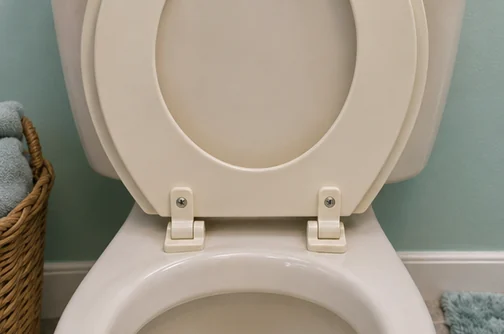
Short answer: Most loose seats have loose hinge bolts or worn fasteners. Open the hinge caps, tighten the bolts gently and evenly, and hold the nut underneath if a bolt spins. If it still wobbles, replace the seat. If the toilet is cracked or moves on the floor, call a plumber.
Check the warning signs below first.
Use this guide at your own risk. It’s general information, not professional advice. By using it, you agree to our Terms of Use and Safety Waiver.
Check for danger first
If any of these are present, stop here.
- Gas odor, smoke or fire. Leave immediately. From outside, call emergency services. For a gas odor, also call the gas utility. Leave lights and switches alone.
- Burning smell, scorch marks, a hot outlet or a buzzing panel. Stop and call an electrician. Stay clear of a suspect panel.
- Water near electrical equipment or exposed wiring. Keep away. Never cross water to reach a plug or breaker. Call a qualified electrician.
None of these warning signs? Open the checks
What to check
Have ready. A flat-head screwdriver, pliers or an adjustable wrench, a rag, and the seat’s brand if it’s printed on the hinge.
Open the hinge caps.
The bolts are at the back of the seat, usually under snap-on caps. Flip them up. Some quick-release seats lift off first: press the hinge buttons and pull the seat up, then tighten the screws underneath.
Tighten the bolts gently.
Turn each bolt clockwise from the top with a screwdriver. If the nuts are under the bowl, hold the bolt still and tighten the nut by hand or with a wrench. Do both sides evenly and stop when the seat is firm. Too much force can strip or break the bolt or damage the bowl.
Hold the nut if the bolt spins.
If the bolt just turns in place, hold the nut under the bowl with pliers or a wrench while you turn the bolt from the top. Metal tools scratch porcelain, so wrap the jaws with a rag.
Replace the seat if it won’t stay tight.
If the bolts are tight and the seat still wobbles, or it keeps loosening, the hinges or fasteners are worn. A new seat that fits your bowl shape, round or elongated, is the fix.
When to stop. If the bowl or tank is cracked, or the toilet itself moves on the floor, stop and call a plumber. A cracked toilet can leak or break.
What it costs
- The checks above: free.
- Pro toilet seat replacement: $60–$150.
- Pro toilet repair, if more is wrong: $149–$355, most people pay about $230.
National US ranges from 2025–2026 cost guides: Fixr · Thumbtack. Prices in your area may differ.
Common causes
- Loose hinge bolts. Bolts under the hinge caps loosen with use and let the seat shift side to side. You can check
- A bolt that spins in its nut. If the nut under the bowl turns with the bolt, the bolt never gets tight until you hold the nut. You can check
- Worn fasteners or hinges. Worn hardware keeps loosening even after you tighten it, so the seat needs replacing. You can check
- Wrong seat size or misaligned hinges. A seat that doesn’t match the bowl shape, or hinges set off-center, won’t sit steady. You can check
Sources: Bemis: tighten a toilet seat · Bemis: seat troubleshooting · American Standard.
Further reading · Bemis (ToiletSeats.com)
Still stuck? Get help with your exact problem.
Snap a photo and tell the app what you’ve tried. It walks you through your model, one safe step at a time, and tells you when to call a pro. Your first fix in the app is free.
The app is coming soon. Get one email the day it launches.
One email when the app launches. No spam. Privacy Policy