
Microwave sparking
Find the metal, food buildup or damaged part that’s causing sparks, and know when the microwave needs repair or replacement.
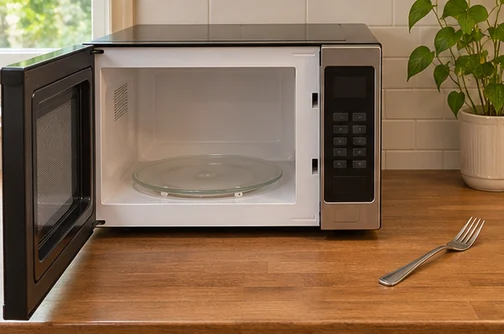
Short answer: Sparks usually come from metal inside, a rack out of place, food splatter on the walls or waveguide cover, or running it empty. Remove the metal, check the rack and turntable, clean the inside and test with a cup of water. If it still sparks, or the cover is burnt or the paint is peeling, stop using it and call a technician or replace it.
Check the warning signs below first.
Use this guide at your own risk. It’s general information, not professional advice. By using it, you agree to our Terms of Use and Safety Waiver.
Check for danger first
If any of these are present, stop here.
- Gas odor, smoke or fire. Leave immediately. From outside, call emergency services. For a gas odor, also call the gas utility. Leave lights and switches alone.
- Burning smell, scorch marks, a hot outlet or a buzzing panel. Stop and call an electrician. Stay clear of a suspect panel.
- Water near electrical equipment or exposed wiring. Keep away. Never cross water to reach a plug or breaker. Call a qualified electrician.
None of these warning signs? Open the checks
What to check
Have ready. A microwave-safe cup of water, a soft cloth, mild soap, and your owner’s manual or model number.
Stop it and take out any metal.
Stop the microwave right away. Remove foil, metal utensils, twist ties and dishes with gold or silver trim. If something inside is on fire, keep the door closed, turn it off, unplug it only if you can reach the plug safely, and don’t open the door until the fire is out.
Check the rack and turntable.
If your model has a metal rack, it must sit on all its support brackets and not touch the walls. Make sure the glass turntable is in place.
Clean the walls and the waveguide cover.
Once it’s cool, wipe food splatter off the walls, the ceiling and the waveguide cover, a flat panel usually on a side wall. Food buildup can spark. Never run the microwave empty.
Test with a cup of water.
Put 8 oz of water inside and run it for 30 seconds. LG says if there’s no sparking, it’s OK to keep using it.
When to stop. If it still sparks, the waveguide cover is burnt, cracked or missing, or the paint inside is flaking, peeling or burned through, stop using it. Replace the waveguide cover only if your maker says owners can, and never open the outer cabinet. Call a technician or replace the microwave.
What it costs
- The checks above: free.
- Pro microwave repair: $121–$308, most people pay about $194.
- Service call: $50–$100.
National US ranges from 2025–2026 cost guides: Thumbtack · Fixr. Prices in your area may differ.
Common causes
- Metal inside. Foil, metal utensils, twist ties and gold or silver trim reflect microwaves and spark. You can check
- Metal rack out of place. A rack that isn’t on all its brackets and touches the wall will spark. You can check
- Food splatter on the walls. Crumbs and spills that build up inside can overcook and spark. You can check
- Running it empty. With nothing inside to absorb the energy, it can spark and scorch the interior. You can check
- Damaged waveguide cover. A burnt, chipped or cracked cover can keep arcing until it’s replaced. Call a pro
- Damaged interior coating. GE says flaking or peeling paint or a burned hole can’t be repaired, so the microwave should be replaced. Call a pro
Sources: LG · GE Appliances · Samsung · Sub-Zero Wolf.
Further reading · LG
Still stuck? Get help with your exact problem.
Snap a photo and tell the app what you’ve tried. It walks you through your model, one safe step at a time, and tells you when to call a pro. Your first fix in the app is free.
The app is coming soon. Get one email the day it launches.
One email when the app launches. No spam. Privacy Policy