
Kitchen sink clogged
Tell whether the clog is in the disposal or the drain, and clear it safely with a plunger.
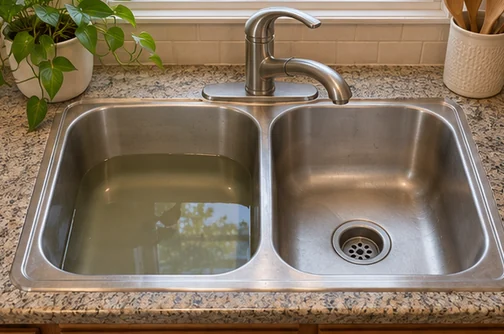
Short answer: Most kitchen clogs are food and grease in the disposal or the drain. Check the disposal side, block the other drain and plunge with a few inches of water, and don’t add chemical cleaner to standing water. If it still won’t drain, the clog is likely in the trap or beyond, which is a job for a plumber.
Check the warning signs below first.
Use this guide at your own risk. It’s general information, not professional advice. By using it, you agree to our Terms of Use and Safety Waiver.
Check for danger first
If any of these are present, stop here.
- Gas odor, smoke or fire. Leave immediately. From outside, call emergency services. For a gas odor, also call the gas utility. Leave lights and switches alone.
- Burning smell, scorch marks, a hot outlet or a buzzing panel. Stop and call an electrician. Stay clear of a suspect panel.
- Water near electrical equipment or exposed wiring. Keep away. Never cross water to reach a plug or breaker. Call a qualified electrician.
None of these warning signs? Open the checks
What to check
Have ready. A flat sink plunger (not a toilet plunger), a stopper or wet rag, a bucket and old towels.
Check the disposal side first.
If the side with the disposal is the one holding water, the clog is often in the disposal. Turn the disposal off at its switch and keep your hands out of it. If it won’t run at all, follow the disposal guide.
Block the other drain.
On a double sink, put a stopper or a wet rag tightly in the other drain. Otherwise the push from the plunger just comes back up the other side.
Plunge with a few inches of water.
Leave about 4 inches of water in the clogged side. Set the plunger over the drain, press down slowly, then pull up quickly. Repeat several times, without forcing it hard enough to damage the pipes.
Don’t pour chemical cleaner into standing water.
Caustic drain cleaners can splash and burn skin and eyes, can soften plastic pipes, and make it unsafe to plunge afterward.
When to stop. If plunging doesn’t clear it, the clog is likely in the curved pipe under the sink (the P-trap) or farther down the line. Stop and call a plumber. If you already poured in a drain cleaner, tell the plumber which one.
What it costs
- The checks above: free.
- Plumber to clear a kitchen sink clog: $100–$225.
- Drain snaking: about $195 on average. Clearing a clog can run $100–$500 depending on where it is.
National US ranges from 2025–2026 cost guides: Thumbtack · This Old House. Prices in your area may differ.
Common causes
- A clogged disposal. Food packed in the disposal or its drain backs up the disposal side first, and plunging with the other drain blocked often frees it. You can check
- Grease and food buildup. Grease builds up in the drain, especially where it joins the disposal, and narrows the pipe until water backs up. You can check
- A clog in the P-trap. Most sink clogs form in the curved pipe under the sink, and opening it means draining dirty water and resealing fittings. Call a pro
- A clog farther down the drain line. If the trap is clear, the blockage is deeper in the pipes and needs a plumber’s auger. Call a pro
Sources: InSinkErator · Bob Vila.
Further reading · InSinkErator
Still stuck? Get help with your exact problem.
Snap a photo and tell the app what you’ve tried. It walks you through your model, one safe step at a time, and tells you when to call a pro. Your first fix in the app is free.
The app is coming soon. Get one email the day it launches.
One email when the app launches. No spam. Privacy Policy