
Refrigerator ice dispenser not working
Tell whether the ice maker is off or locked, the ice has clumped, or the chute is blocked, before calling for service.
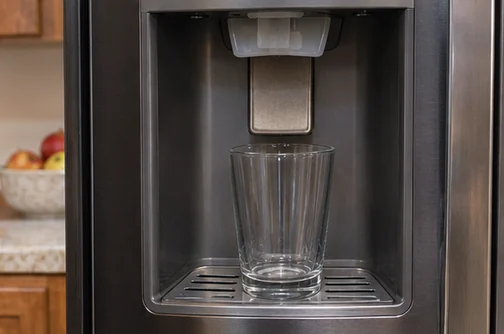
Short answer: An ice maker that’s off, a dispenser lock, clumped ice or a blocked chute is the usual cause. Check the settings, seat the bin, break up or dump clumped ice and clear the chute with a wooden spoon. If the dispenser still won’t deliver ice, the auger motor or dispenser parts need an appliance technician.
Check the warning signs below first.
Use this guide at your own risk. It’s general information, not professional advice. By using it, you agree to our Terms of Use and Safety Waiver.
Check for danger first
If any of these are present, stop here.
- Gas odor, smoke or fire. Leave immediately. From outside, call emergency services. For a gas odor, also call the gas utility. Leave lights and switches alone.
- Burning smell, scorch marks, a hot outlet or a buzzing panel. Stop and call an electrician. Stay clear of a suspect panel.
- Water near electrical equipment or exposed wiring. Keep away. Never cross water to reach a plug or breaker. Call a qualified electrician.
None of these warning signs? Open the checks
What to check
Have ready. A plastic or wooden spoon, a container for ice, a warm damp cloth or sponge, a towel and your refrigerator’s manual.
Check the settings.
Make sure the ice maker is turned on and the dispenser or child lock is off. A lock usually shows as a lock symbol on the panel. The freezer needs to be 0°F or colder to make ice, and the doors must be fully closed.
Check the ice bin.
Look in the bin for ice and make sure the bin is fully snapped into place. If it isn’t seated, the dispenser can run without pushing ice out. If the bin is frozen in place, don’t force it or use a hair dryer.
Break up or dump clumped ice.
Ice that sits unused can fuse into clumps that jam the dispenser. Break clumps with a plastic utensil, never anything sharp, or dump the bin and let fresh ice form. Dry the bin before putting it back.
Clear the chute.
With the bin removed and a container in the dispenser opening, push stuck ice out of the chute with a wooden spoon. Wipe frost off the chute and its flap with a warm damp sponge, then dry it. Keep your fingers out of the opening.
When to stop. If the bin is frozen in place, the flap won’t close or frost keeps coming back, or the bin has loose ice but the dispenser still won’t deliver it, stop and call the maker’s service or an appliance technician. The auger motor and dispenser parts sit behind covers.
What it costs
- The checks above: free.
- Pro ice maker repair: $150–$250, about $200 on average.
- Refrigerator repair: $138–$350, most people pay about $220.
- Diagnostic fees usually run $60–$100.
National US ranges from 2025–2026 cost guides: Fixr · Thumbtack. Prices in your area may differ.
Common causes
- Clumped ice. Humidity and unused ice make cubes fuse together, which jams the dispenser. You can check
- Dispenser lock or ice maker off. A child or dispenser lock disables the dispenser, and an ice maker that’s off makes no ice. You can check
- Bin not fully seated. If the bin isn’t snapped in, the dispenser motor may not connect to it. You can check
- Ice jammed or frost in the chute. Ice can lodge in the chute, and frost can build on the chute flap. You can check
- Frozen auger motor. Frost behind the freezer wall can stop the auger motor, which then needs service. Call a pro
- Flap not closing. A chute flap that doesn’t close lets frost keep building and needs a technician. Call a pro
Sources: KitchenAid · Samsung · GE Appliances · GE Appliances, frost on chute.
Further reading · GE Appliances
Still stuck? Get help with your exact problem.
Snap a photo and tell the app what you’ve tried. It walks you through your model, one safe step at a time, and tells you when to call a pro. Your first fix in the app is free.
The app is coming soon. Get one email the day it launches.
One email when the app launches. No spam. Privacy Policy