
Hot water takes a long time
Find out whether the wait comes from pipe distance, low flow, a tankless heater or a recirculation pump’s timer.
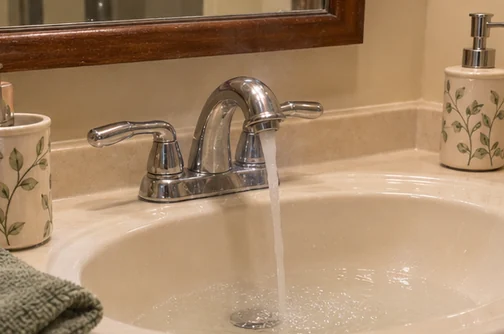
Short answer: The wait mostly comes from the distance between the water heater and the tap, and low-flow fixtures make it longer. Run the tap fully open, give a tankless heater enough flow, and check any recirculation pump’s timer. Adding a pump or new piping is a job for a licensed plumber.
Check the warning signs below first.
Use this guide at your own risk. It’s general information, not professional advice. By using it, you agree to our Terms of Use and Safety Waiver.
Check for danger first
If any of these are present, stop here.
- Gas odor, smoke or fire. Leave immediately. From outside, call emergency services. For a gas odor, also call the gas utility. Leave lights and switches alone.
- Burning smell, scorch marks, a hot outlet or a buzzing panel. Stop and call an electrician. Stay clear of a suspect panel.
- Water near electrical equipment or exposed wiring. Keep away. Never cross water to reach a plug or breaker. Call a qualified electrician.
None of these warning signs? Open the checks
What to check
Have ready. A phone timer, a kitchen thermometer, and the manuals for your water heater and any recirculation pump.
Time it with the tap fully open.
The wait depends mostly on how far the faucet is from the water heater, because the cooled water in the pipe has to run out first. Halving the flow doubles the wait, so low-flow faucets and showerheads take longer.
If you have a tankless heater, use enough flow.
A tankless heater makes hot water within a few seconds, but it needs a minimum flow to turn on. Rinnai’s gas units need 0.4 to 0.6 gallons per minute, so a trickle may not start the heater at all.
If you have a recirculation pump, check its timer.
Many pumps run only during scheduled hours. Make sure it’s plugged in and that its schedule covers the times you use hot water, following the pump’s manual.
Check how hot it gets.
Once the water is hot, hold a kitchen thermometer under the tap. The CPSC recommends 120°F. Don’t open the water heater’s covers or panels to change the setting.
When to stop. Adding a recirculation pump, a return line or new piping is a job for a licensed plumber, and electrical connections need a qualified electrician. Call a plumber or water heater technician if the water never gets close to 120°F.
What it costs
- The checks above: free.
- Plumber’s rate: $75–$150 an hour, about $90 on average.
- The national average is about $100 an hour, plus a service fee or minimum charge.
National US ranges from 2025–2026 cost guides: Fixr · This Old House. Prices in your area may differ.
Common causes
- Long pipe run from the heater. The farther the tap is from the water heater, the more cooled water has to run out before hot water arrives. Call a pro
- Low-flow faucets and showerheads. Halving the flow doubles the time it takes to push the cooled water out of the pipe. You can check
- Too little flow for a tankless heater. A tankless gas heater needs a minimum flow to fire, so a trickle may never turn it on. You can check
- Recirculation pump off its schedule. Pumps with timers only run during the hours set, so a wrong schedule or an unplugged pump means the old wait. You can check
- Oversized pipes. Large pipes hold more water and let hot water mix with cool water, which makes the wait longer. Call a pro
Sources: Rinnai · Green Building Advisor · Grundfos ALPHA CS manual · CPSC.
Further reading · Rinnai
Still stuck? Get help with your exact problem.
Snap a photo and tell the app what you’ve tried. It walks you through your model, one safe step at a time, and tells you when to call a pro. Your first fix in the app is free.
The app is coming soon. Get one email the day it launches.
One email when the app launches. No spam. Privacy Policy