
Dryer overheating
Tell whether lint, a blocked or crushed vent, or an overloaded drum is trapping heat before it turns into a fire risk.
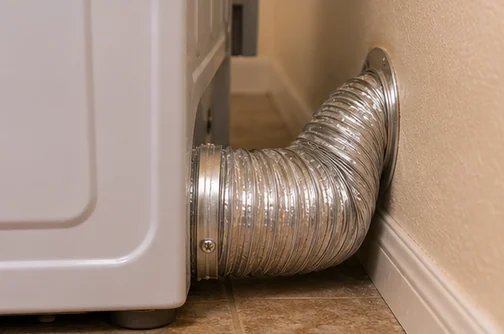
Short answer: A dryer that runs too hot usually can’t get rid of its hot air because of lint, a blocked or crushed vent, or an overloaded drum. Clean the lint screen, check for strong air at the outside vent, look at the duct behind it and don’t overload it. If you smell burning, stop using it; if the vent is clear and it still runs hot, call an appliance technician.
Check the warning signs below first.
Use this guide at your own risk. It’s general information, not professional advice. By using it, you agree to our Terms of Use and Safety Waiver.
Check for danger first
If any of these are present, stop here.
- Gas odor, smoke or fire. Leave immediately. From outside, call emergency services. For a gas odor, also call the gas utility. Leave lights and switches alone.
- Burning smell, scorch marks, a hot outlet or a buzzing panel. Stop and call an electrician. Stay clear of a suspect panel.
- Water near electrical equipment or exposed wiring. Keep away. Never cross water to reach a plug or breaker. Call a qualified electrician.
None of these warning signs? Open the checks
What to check
Have ready. A flashlight, a vacuum or lint brush, the dryer’s manual, and a second person to check the outside vent.
Clean the lint screen every load.
Pull out the lint screen and clean it before or after each load. Never run the dryer without it. If clothes are still damp after a normal cycle or drying takes longer than usual, lint may be blocking the screen or the vent.
Check for air at the outside vent.
With the dryer running, go outside to the vent hood. You should feel strong air coming out and the flap should open. Little or no air, or a hood blocked by a nest, plants, lint or snow, means the vent is restricted.
Look at the duct behind the dryer.
Turn the dryer off and, without unhooking anything, look behind it. The duct should be metal, not plastic or foil, and not crushed, kinked or pinched by a dryer pushed against the wall. Long runs with many elbows also cut airflow.
Don’t overload it, and use an automatic cycle.
A packed drum restricts airflow, so follow the load size in your manual. For most loads use an automatic dryness cycle instead of Timed Dry, which can over-dry. Don’t run the dryer when you leave home or go to bed.
When to stop. If you smell burning, see scorched clothes or the cabinet is too hot to touch, stop the dryer and don’t use it again until it’s checked. If air at the vent stays weak, call a dryer vent cleaning service. If the vent is clear and it still runs hot, call an appliance repair technician. Thermostats and fuses are inside the cabinet.
What it costs
- The checks above: free.
- Pro dryer repair: $127–$324; most people pay about $203.
- Dryer vent cleaning: $100–$200, about $150 on average.
- Common fix: a new thermostat, $100–$260.
National US ranges from 2025–2026 cost guides: Thumbtack · Fixr vent cleaning · Fixr. Prices in your area may differ.
Common causes
- Lint screen clogged. Lint blocks airflow and lets heat build up, which the CPSC warns can start a fire. You can check
- Outside vent hood blocked. A nest, plants, lint or snow at the hood keeps hot, moist air from leaving. You can check
- Duct crushed, kinked or the wrong type. Plastic or foil duct crushes and traps lint easily; most makers call for rigid or semi-rigid metal duct. You can check
- Overloaded drum or Timed Dry. A packed drum restricts airflow, and Timed Dry keeps heating for the set time even after clothes are dry. You can check
- Lint packed inside the vent run. Lint builds up along the duct, which should be cleaned every one to two years or sooner if drying slows. Call a pro
- Faulty thermostat. A bad thermostat can let the dryer run too hot and scorch clothes; it’s inside the cabinet. Call a pro
Sources: CPSC · Whirlpool · GE Appliances · NFPA · Fixr.
Further reading · U.S. Consumer Product Safety Commission
Still stuck? Get help with your exact problem.
Snap a photo and tell the app what you’ve tried. It walks you through your model, one safe step at a time, and tells you when to call a pro. Your first fix in the app is free.
The app is coming soon. Get one email the day it launches.
One email when the app launches. No spam. Privacy Policy